The Positive Thread...
OFF TOPIC discussions
Good news, Venni. Welcome back.
@ken-longfield Anything for you, my friend! :) On a more serious note, very cold temperatures are coming tonight and lots of fruit trees are in bloom now. Time will tell how it goes. Keep warm there in PA!
I agree that the dark spot looks to be in the wood.
Ken
"The dulcimer sings a sweet song."
Venni, glad to hear the you made it through. Best wishes for continued improvement in your health.
Robin, you can keep the snow in Ohio, thank you.
Ken
"The dulcimer sings a sweet song."
To me the dark spot looks like it is in the wood.
Does not appear to have a 13.5 fret. The 6.5 will not be a problem. As you learn, you just have to remember it is there. I play a dulcimore without a 6.5 fret most of the time then if I pick up my only one with the 6.5 fret, it takes me a few minutes to remember it is there.
One more quick question. This build is solid maple (curly maple top and bookmatched bottom).
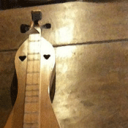
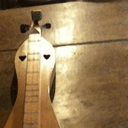
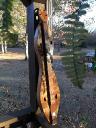
I am told that the dark streak on the back is not a crack, but just darker color in the wood.
To me it looks like someone dripped something across the back. Any thoughts?

Thanks Richard!
If I'm seeing this correctly the added 6 1/2 fret is right over a position dot? No 13 1/2, correct? Will this be a problem? I'm looking at a possible 1st dulcimer. It has been in a case in resident's closet for at least 25 years.
This appears to be a Warren May built in 1987 (based on label) that has been switched to GOTAH covered tuners and a 6 1/2 fret added.
Thanks!!
It looks like it has a 6 1/2 that has been added.
does this dulcimer have a 61/2 fret?
Thanks

We woke to a pretty snow this morning here in Ohio. No morel hunting for us today. :)
A piece of wire [paper clip] or wood [tooth pick] or ---- taped in place [tape parallel to the strings] in one of the wide spaces. Frets are usually approximately .040" -.045" or so high. Use your tuner to position the temp fret for the appropriate note.
On the other hand, I still don't know how it works when you mention the noter. I have tried to read information, but maybe because of language problems I don't understand how to use it.
Have you read any of the beginner noter playing posts in my noter-drone Blog ?
Bravo @dusty-turtle!!!
Wow, I am really grateful for so many responses, and they are truly helpful.
@Dusty, that was an interesting thought and I had never thought of it that way. I'm still in the stage of being impressed by great bluegrass players (as I said I thought about buying a banjo or mandolin, because I wanted to learn to play bluegrass, then I thought I could play bluegrass on the dulcimer) but you're right, the important thing is to get a good sound out of it.
@Dan, I play with DAdd tuning. I have tried to play with DAC tuning if the score has that tuning, but I usually play by ear, and I prefer to try to learn with one tuning for the moment so as not to make it more complicated.
@Skip, how do you do for temporary frets? I read somewhere holding a guitar string to create an extra fret, I don't know if that's correct (I think I read it in an interview with Jessica Comeau but I'm not sure). My dulcimer only has 6+ and 13+, many songs I want to play have 1+.
@Strumelia, that's a good argument for having more than one dulcimer, certainly! The problem is that in Spain I can only get basic European made models and they are all diatonic, but when I can save a little I would like to have an American made one.
On the other hand, I still don't know how it works when you mention the noter. I have tried to read information, but maybe because of language problems I don't understand how to use it.
Thank you very much.
Wow Dusty. An amazing post. Wonderful to think about these things in our own 'musicianship'.

Liberated. I feel liberated by the diatonic scale.
Sorry for posting again in this discussion, but I want to explain one reason why I have found my musical home on the dulcimer after years of playing the guitar and other chromatic instruments.
I spent many years playing the guitar (and a few playing the mandolin), and like everyone else on those instruments, I was intent on learning really cool, fancy jazz chords, and developing the ability to play really fast, interesting solos. I was (and still am) in awe of the best bluegrass musicians and was trying to play like them.
But the humble nature of the dulcimer completely changed my thinking about music. With only three strings and a diatonic fretboard, those fancy jazz chords are pretty much impossible, so I began thinking not about how to get the fanciest chord I could, but about isolating the most tasteful harmony note. Instead of trying to play blazing solos with tons of notes, I began trying to isolate the core or essence of a melody, and perhaps enhance it with a few truly meaningful notes or rhythmic nuances rather than ignore it and improvise a solo instead.
Thus began my search for really pretty songs and instruments that sound great. My goal as a dulcimer player is to convey a really pretty song so that others can appreciate it, not so that others will be impressed with my playing. I still do many of the types of exercises I used to do when I wanted to play bluegrass, but now I do them with the goal of playing cleanly, accurately, and with feeling, rather than trying to play fancy stuff really fast.
Ironically, embracing the limitations of the dulcimer has liberated me musically. I am no longer a slave to the endless search for a fancier chord or a faster solo. I am now free to concentrate on conveying the emotion inherent in beautiful melodies instead of hiding them behind a veneer of imagined virtuosity.
Multiple dulcimers and their use as tools are really good points.
I should add that of the 2 the I use the most, one is fully chromatic, mostly for practice, and one is modern diatonic [1+, 6+, 8+, and 13 +], practice and with others. My bass is fully chromatic and the rest split between the two.
Thinking about the basic question, I suppose that the fact I have, and use, extra frets can be seen that I do feel limited with a pure diatonic setup. That even extends to the harmonicas I mess around with as I have both, chromatic and diatonic.
I think of it this way-
Some people like the act and feeling of shifting gears manually on a car. Others like the convenience of automatic transmission.
Some people enjoy playing tunes in different modes and changing the one melody string's tuning in order to play them easily. It's a curiously satisfying feeling to drop the melody string from DAd while playing Old Joe Clark, to DAC to play Shady Grove.
Other people like switching around between melody string fingerdancing and playing chord style or fingerpicking on all strings. Wonderful variety possible!
Personally, I feel there are enough significant differences to justify having more than one dulcimer- one diatonic for the joy of playing traditional tunes in an old style manner, and one with extra frets for tackling tunes that require more accidental notes or more changing keys on the fly (as with a festival jamming situation with other instruments). There's no way I would reach for my diatonic instrument if I was headed to a rockin' jam party scene with oldtime or folk musicians. For those events I'd have to shift on the fly and extra frets definitely help me land on my feet when things change suddenly.
Instruments are tools to make the music you want! Pick the right tool for the particular job you set out to do.
There are a few more things that can help; temporary frets, and 4 equidistant string/chromatic tunings [ie. DAA#D]. I choose to go full chromatic which allows me to have the accidentals when needed without changing the MD sound. But I don't do noter/drone style playing either, the extra frets, without being extra careful with noter pressure, put a 'bump' in the music flow when N/D playing.
Diatonics isn't missing notes. Each mode has its own notes and if you have an accidental, it's probably in another mode.....
If you give us an example of how you are tuned and what note you are "missing" we can direct you to the tuning you need to be in....
AndiBear, most people who have played the dulcimer for any length of time will tell you that the diatonic fretboard is a challenge, not a limitation. When I first started out it seemed like a puzzle to figure out. I would have a melody in my mind and try to figure out where it might fit on the diatonic fretboard. Figuring out that puzzle was part of the fun in the beginning, although it also got frustrating at times.
And remember that if you pick across all the strings and/or have a 6+ fret, you are not limited to the diatonic scale. There are some accidentals available to you. You can get that G#, for example, on the 6+ fret of the middle string (or the melody string, too, in DAA).
Over time, that puzzle disappeared as I listened more and more to music that works on the dulcimer. The reason so much old timey and Celtic music is played on the MD is that the music simply fits. So little by little I stopped trying to fit Beatles tunes onto the dulcimer and I started playing more and more diatonic music. I stopped trying to play Norwegian Wood and started playing Southwind. (By the way, you can play Norwegian Wood, but you need either a capo or a 1+ fret.)
And remember that if you play with your fingers you can always bend strings, and if you play with a noter you can get those "in-between" notes by touching the edge of the noter against the fretboard while it also grabs a string at the right spot. So for the occasional accidental, you can always make due.
In general, as you play the dulcimer, your ear will develop a sense of what tunes can fit on the fretboard, and you'll concentrate on those. There are a lot of them. You won't get bored.
P.S. I have to admit, in the interests of full disclosure, that I also play the guitar and some mandolin as well, so when I really want to play a chromatic tune, I just pick up one of those instruments. And I didn't want to add this to my post, but after a few years I started playing dulcimers with a 1+ fret in addition to the 6+. I find with those two extra frets I can play 90 percent of the tunes that interest me. I wouldn't recommend that right away, though. Get to know the diatonic fretboard before you decide if that's a good option for you.
(Not sure if this question has been asked or at least I haven't read it, I haven't finished reading the forum yet).
First of all, I have to confess that when I bought my dulcimer it was not a reflexive decision, but rather a whim. I had a pentatonic lyre and although the songs sounded beautiful, I was limited by the scale, so I looked for an instrument with more possibilities. I hesitated between banjo and mandolin, but randomly discovered the dulcimer and fell in love. Maybe if I had known it used a diatonic scale I wouldn't have bought it? Maybe, but in that case I would have missed out on getting to know this instrument.
And I certainly don't regret going for the dulcimer, the sound is beautiful, it's a lot of fun to play and although it's annoying to always have to explain what it is, it's very original here.
But... Sometimes you want to play a song and notes are missing. If it's a chord I can manage, but when it's a plucking there are times when there's nothing to do?
Has it ever happened to you, what do you do in these cases, is there a trick or do you just abandon the song?
Thanks!!
Thanks so much, @dusty-turtle ! I really love my Flatwater!
Warren makes fine instruments, chorded or noted. Yes his scale is proprietary as is most modern makers but I've heard many of his pieces over the years and they are wonderful! (Yes Maple has a little brighter tone) If you are good with the price buy it!
I've heard some professional players suggest that maple instruments have more sustain than other common woods. I can't vouch for that myself. To be honest, I can't even be sure I hear the difference between woods. Different luthiers make instruments that sound different, but I've never been confident that I could identify the wood as the reason for a specific dulcimer's sound. I like the look of maple, though, for what that's worth.
That looks like a fine instrument. And remember that things like string spacing can be adjusted with altered or new bridges and nuts later one, so that's not a feature that should influence whether you buy an instrument or not. Scale length is different, though, so you might want to ask about that.
Thanks to @strumelia and @John-Gribble for getting this to a better forum and specific comment on scale!
Hi- I transferred this discussion to our forum about specific luthiers and instruments, since it's not really a discussion about beginning to play.
Personally, I love how maple sounds!- I think of the tone as warm but snappy, like a good toffee. :D
@John-Gribble is right in that (in general) any hardwood dulcimer will be slightly less warm/mellow sounding than softwood.
To be honest this sounds like a wonderful dulcimer and I'm pretty sure it would win over your heart. 
The scale on mine is 26 3/4", the fretboard is 1 1/2" and the string spacing is basically equidistant. I hope that helps with your decision. Mine is all walnut—not the most mellow, but that would be true of most all-hardwood instruments.
Hello All: I am giving some considertion about a Warren May built in approx. 1996. Appears to be (and seller info says) curly maple top and back. Will solid maple sound super bright??I'd prefer something more mellow. Seller out of town so I can't get label info. I met Warren many years ago at his shop when he had it. His craftsmanship on dulcimers (and fine furniture) is beautiful. Understand that because he builds "traditional" KY scale", they are best for noter style playing and can be difficult to chord and/or fingerpick. Seller is out of town for a few days so I can't get label info, but do know they got it about 25 years ago, took a few lessons, decided dulcimer was not for her and put it in case since then.
Looks nice. One scratch (I assume it is a scratch from pic) on back.
I'll appreciate any comments anyone has. Thanks - John


Hi Lynn,
Dusty is right, you can’t specify the woods and while there are some visual differences (check out the Facebook page for The Dulcimer Shoppe) that only makes each one unique. The tone woods are excellent and the wood combinations vary. If you go to their Facebook site, check out the Flatwater intro video around Black Friday 2020. Former National Dulcimer Champion Duane Porterfield introduces the Flatwaters to the world and the one you’ll see him play is the one I bought. By the way, I didn’t know that until I opened mine on Christmas Day. Good luck, have fun and I hope you get yours soon and let us all know your impressions.
Thank you for the detailed feedback, Wendell and Dusty T. They do not have any in stock........they sell out fast! I’m going to call this week and order one. They certainly fit my budget, and with my current playing ability I don’t feel I can justify spending more than that (at least for now).
Lynn
My understanding is that the Flatwater models are indeed made from fine tonewoods, but you can't specify the wood when you order one. They put the instruments together with wood leftover from their other builds. In terms of the visuals, my guess is that they will vary a bit. But the quality of McSpadden builds is unquestioned, so they should all play and sound very nice.
I've seen a YouTube video by FOTMD member @belinda playing one that both looks and sounds great.
Hi there, I got one of the very first Flatwater dulcimers that were made for Christmas from my wonderful wife. In fact, I by chance got the one that is played in the video that introduced them. The Flatwater is just plain fun. The wood may not be super top grade visually and the volume is not as load as my McSpadden or some of my other dulcimers. However, the build quality and tone are excellent. The 26 inch scale is terrific and the intonation is spot on. I love mine and have had a lot of fun playing it. Sweet dulcimer for a good price.


That is amazing, Strumelia!
Closest I have ever got to that sort of work was in 2003 when I was still working as a receiving dock porter at Mt Sinai Hospital here in Toronto ... folks whose supplies I delivered were fighting the SARS outbreak in our hospital. I did my part, you are doing yours, it's all good.
Dusty, we are in the same situation. We had our first 'in house' company' last night. All had their shots and we had a great time. It is good being able to re-establish person to person contact with little fear.
Congratulations to all those folks getting vaccinated. By early May everyone in my household will have gotten their second dose, and my folks are already making noise about some kind of family reunion since they haven't seen their children or grandchildren in about 18 months. I'm sure other families and friends are planning similar gatherings.
Strumelia, one day the complicated history of the fight against COVID will be told, and I'm sure we'll learn of an army of people all doing their small part to bring about vaccines and a better understanding of how the virus works. That will be an interesting story.
Good for you @Dan !
I'm currently working on a very large patent drawing job (that's what I do for a living) that consists of drawing a million biotech research graphs, chemical charts, and diagrams. I don't understand what it all actually means, but I have to draw it on my computer accurately and clearly so it can be submitted to the US Patent Office. For 22 years I've done lots of these kinds of medical research drawing jobs, lots of it involved with cancer cures, disease, and genetics. For the first time in a job I'm now seeing lots of references to Covid-19 RNA/DNA virus testing stuff. Feels strange to be working on it and to realize I have a tiny molecular role in battling the pandemic.
I got my second shot of Moderna today, no side effects on this one or the first......looking forward to seeing the grand babies now!




![IMG_2331[1].JPG](https://fotmd.com/forum/image/forum_file/40626/icon/crop=auto/_v=4cfce1619039293)